Red Light Therapy and Loose Skin
Red light therapy has become a popular non-invasive skincare treatment for people looking to improve skin firmness, reduce the appearance of fine lines, and support a smoother complexion. But does red light therapy actually tighten skin? Red light therapy may help improve skin elasticity, support collagen production, and soften the appearance of wrinkles over time. However, results depend on the device, treatment consistency, and individual skin concerns.
Red light therapy uses specific wavelengths of red light to stimulate cellular activity within the skin. Unlike surgical skin tightening or treatments that use concentrated heat, red light therapy is generally gentle and does not intentionally damage the skin’s surface. It can be a useful addition to an anti-aging skincare routine, although it is not a replacement for professional treatments when significant skin laxity is present.
Whether you want firmer facial skin, smoother skin around your eyes, or improved skin texture on your stomach, understanding how red light therapy works can help you determine whether it is right for your skincare goals.
🔬 How Does Red Light Therapy Work to Tighten Skin?
Red light therapy, also called red light photobiomodulation, uses specific wavelengths of visible red light to interact with cells in the skin. Many skincare devices use red light in the approximate range of 630–660 nanometers, while some devices also include near-infrared light, commonly around 810–850 nanometers.
These wavelengths can interact with cellular structures involved in energy production and signaling. Researchers believe these effects may support processes associated with skin repair, inflammation regulation, and collagen production.
🧬 1. It May Support Collagen Production
Collagen is a structural protein that helps keep skin firm, resilient, and smooth. As we age, collagen production declines, contributing to fine lines, wrinkles, and loose-looking skin.
Red light therapy may stimulate fibroblasts, the cells responsible for producing collagen and other components of the skin’s supporting structure. With consistent use, this may help improve the appearance of fine lines and skin texture.
✨ 2. It May Improve Skin Elasticity
Skin elasticity refers to the skin’s ability to stretch and return to its original shape. Aging, sun exposure, and natural changes in collagen and elastin can reduce this ability.
Some clinical studies suggest that red light therapy may improve certain measures of skin elasticity and firmness. However, results vary, and more research is needed to establish which wavelengths, treatment doses, and devices produce the most reliable benefits.
😊 3. It May Reduce the Appearance of Fine Lines
By supporting skin function and potentially improving collagen-related changes, red light therapy may help soften the appearance of fine lines and wrinkles. These changes typically develop gradually rather than immediately after treatment.
🌿 4. It May Support Overall Skin Texture
Red light therapy may help improve the appearance of uneven texture and dull-looking skin. Some people notice a smoother complexion with regular use, although it is not a primary treatment for deep acne scars, pronounced wrinkles, or significant skin damage.
✅ What Can Red Light Therapy Do for Skin?
Red light therapy is best understood as a gradual skin-supporting treatment rather than an instant skin-tightening solution.
- Improved skin firmness: May modestly improve the appearance of mild skin laxity over time.
- Smoother-looking skin: May soften the appearance of fine lines and wrinkles.
- Support for collagen production: May stimulate biological processes involved in maintaining the skin’s structure.
- Improved skin texture: May help skin look smoother and more refreshed.
- A non-invasive skincare option: Does not require injections, incisions, or intentional skin resurfacing.
- A convenient at-home treatment: Certain FDA-cleared or appropriately regulated devices are designed for personal use.
Results are usually subtle and gradual. Red light therapy is not guaranteed to produce visible changes, and the quality of evidence differs depending on the treatment and the outcome being measured.
⚠️ What Can’t Red Light Therapy Do?
Although red light therapy has potential benefits, it is important to understand its limitations.
It Cannot Dramatically Tighten Loose Skin
Red light therapy is unlikely to significantly tighten large amounts of loose skin following substantial weight loss, pregnancy, or advanced aging. These concerns may require medical evaluation and treatments that provide a stronger tightening effect.
It Cannot Replace a Surgical Facelift or Tummy Tuck
Red light therapy does not remove excess skin or reposition underlying facial tissues. It should not be expected to deliver the results of surgery or other intensive skin-tightening procedures.
It Cannot Eliminate Deep Wrinkles
The treatment may soften some fine lines, but deeper wrinkles and pronounced folds generally require a more comprehensive approach. Results will depend on the cause and severity of the wrinkles.
It Cannot Prevent All Signs of Aging
Red light therapy does not stop the natural aging process or reverse all damage caused by ultraviolet radiation. Daily sunscreen, a suitable moisturizer, and other evidence-based skincare practices remain essential.
It Cannot Guarantee Results
Different devices deliver different wavelengths, light intensities, and treatment doses. Individual responses also vary, so some people may see improvements while others notice little change.
👤 Who Might Be a Good Candidate for Red Light Therapy?
Red light therapy may be worth considering for people who want a non-invasive way to support skin health and address mild visible signs of aging. It is important to have realistic expectations and select a device that is appropriate for your skin and goals.
Use this checklist to see whether red light therapy might be a suitable option for you.
- ☐ You want to improve the appearance of fine lines and wrinkles.
- ☐ You have mild skin laxity and want to support skin firmness.
- ☐ You want to support collagen production and skin elasticity.
- ☐ You are interested in improving the appearance of uneven skin texture.
- ☐ You prefer a non-invasive skincare treatment without needles or surgery.
- ☐ You are willing to use a device consistently for several weeks.
- ☐ You understand that results may be subtle and vary from person to person.
- ☐ You are prepared to continue using sunscreen and maintaining a consistent skincare routine.
- ☐ You have selected a device with appropriate safety information and evidence for its intended use.
When Should You Speak With a Healthcare Professional First?
Red light therapy is not suitable for everyone. Speak with a dermatologist or other qualified healthcare professional before use if you:
- Have a photosensitive condition or take medication that increases sensitivity to light.
- Have an eye condition or concerns about light exposure.
- Have a history of skin cancer or suspicious skin lesions.
- Have persistent skin irritation, unexplained skin changes, or another skin concern that needs evaluation.
- Have significant loose skin and want to determine which treatment is most likely to help.
People with darker skin tones or a history of pigmentation concerns should also check whether the device is appropriate for their skin and intended treatment.
Important: This checklist is for general educational purposes and does not determine whether red light therapy is medically appropriate for you.
📅 How Often Should You Use Red Light Therapy for Skin Tightening?
The recommended frequency depends on the device and its manufacturer’s instructions. Many at-home red light therapy devices recommend treatments several times per week, while others are designed for daily use.
A consistent schedule is generally more useful than occasional treatments. However, longer or more frequent sessions do not necessarily produce better results.
A Typical At-Home Treatment Schedule
For many facial devices, a practical starting point is:
- Frequency: Approximately 3–5 sessions per week, if permitted by the manufacturer’s instructions.
- Session length: Often around 5–15 minutes, depending on the device.
- Consistency: Continue for several weeks before evaluating changes.
- Results: Some studies report improvements after approximately 4–12 weeks, although outcomes vary and longer-term maintenance may be needed.
These figures are general examples, not a universal prescription. Always follow the specific device’s instructions because treatment time and frequency depend on its output, design, and intended use.
⏳ When Will You See Results?
Red light therapy is not an overnight treatment. Some users report changes in skin appearance after several weeks, but noticeable improvements in firmness may take longer and may be modest.
Take photographs under consistent lighting before beginning treatment and repeat them every four weeks. This can help you assess changes more objectively than relying on daily observations.
If you experience persistent redness, irritation, discomfort, or eye symptoms, stop treatment and seek appropriate medical advice.
💡 Types of Red Light Therapy Devices for Skin Tightening
At-home red light therapy devices come in several forms. The best option depends on the area you want to treat, how easily you can use the device consistently, and whether it has been tested for your intended purpose.
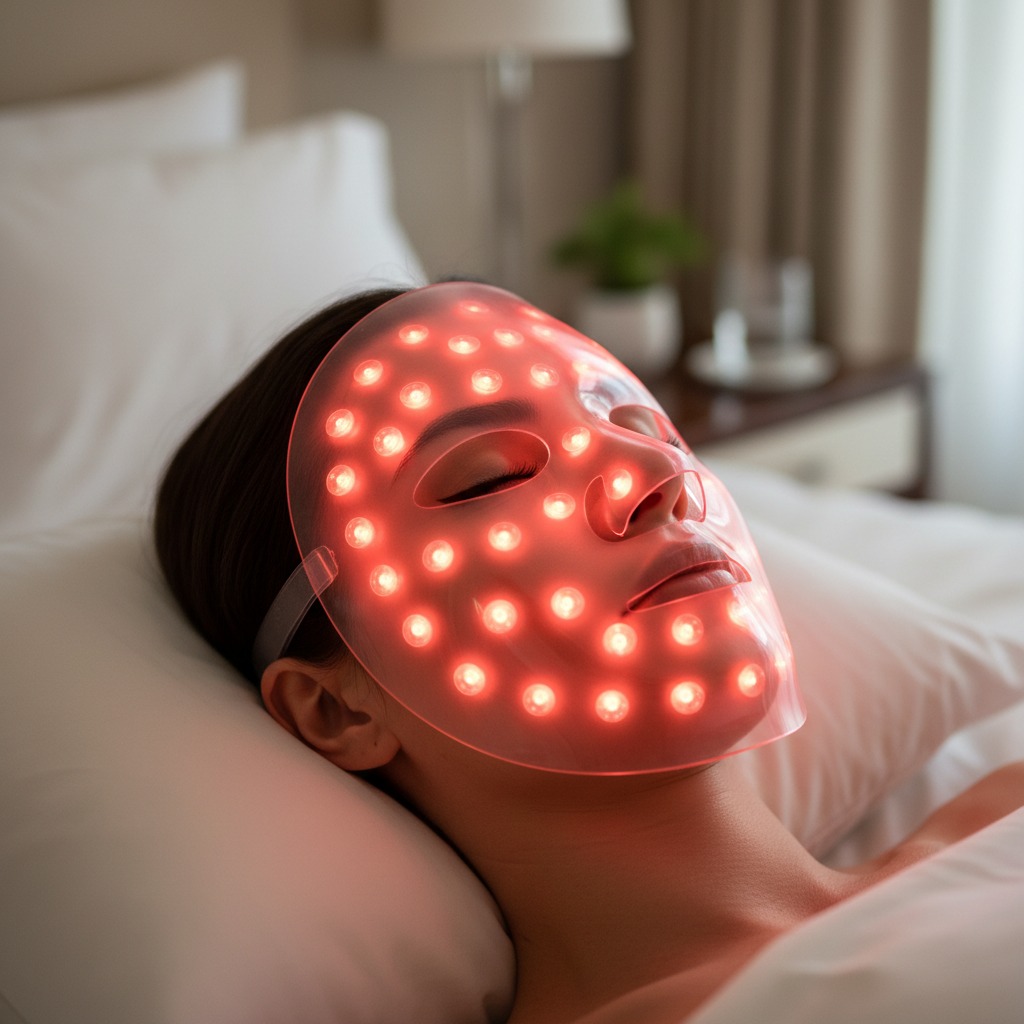
🎭 1. Red Light Therapy Face Masks
Face masks are designed to deliver red light across much of the face. Many models combine red light with near-infrared wavelengths.
Potential benefits:
- May help soften the appearance of fine lines.
- May support facial skin firmness and elasticity.
- Treats multiple facial areas in a single session.
- Fits into an established skincare routine.
Best for: People concerned about mild facial skin laxity, fine lines, and overall skin texture.
What to know: A well-designed mask should fit comfortably and deliver appropriate light exposure across the intended treatment area. Look for clearly stated wavelengths, treatment times, safety instructions, and credible evidence for the specific device.
🖐️ 2. Red Light Therapy Wands
Red light therapy wands are handheld devices designed for more targeted treatment. Depending on the model, they may use red light alone or combine it with other technologies, such as heat or vibration.
Potential benefits:
- Allows targeted application around the cheeks, forehead, or jawline.
- Can be easier to maneuver around smaller areas.
- May be useful for people who prefer treating one area at a time.
Best for: Targeted facial skincare and small treatment areas.
What to know: Wands vary substantially in power, coverage, and technology. A small treatment head may require more time to cover an entire area, and not every wand has been clinically tested for skin tightening. Check whether the device uses red light alone or combines it with other treatments.
🤰 3. Red Light Therapy Stomach Wraps and Belts
Red light therapy wraps are designed to fit around the abdomen or other body areas. Some include near-infrared light, and others combine light therapy with heat or additional features.
Potential benefits:
- Offers convenient treatment of the abdominal area.
- May support skin appearance and texture.
- Allows hands-free treatment with some designs.
Best for: People interested in supporting the appearance of abdominal skin after weight changes or pregnancy.
What to know: Evidence for meaningful tightening of loose abdominal skin with at-home red light wraps is limited. A wrap should not be expected to remove excess skin, eliminate stretch marks, or produce significant fat loss. If your main concern is substantial loose skin, consult a qualified healthcare professional about more effective options.
🔴 4. Red Light Therapy Panels
Panels are larger devices designed to illuminate broader areas of the face or body. Depending on the model, they may deliver red light, near-infrared light, or both.
Potential benefits:
- Can cover a larger area than a small wand.
- May be suitable for treating the face, neck, chest, or other body areas.
- Can be used without wearing a mask.
Best for: People who want to treat multiple areas or prefer a non-contact device.
What to know: Panels require appropriate positioning and distance. Light intensity changes with distance, so follow the manufacturer’s instructions rather than assuming that closer or longer exposure is better.
🛒 How to Choose a Red Light Therapy Device
Not all red light devices are equally effective. Before purchasing a face mask, wand, panel, or stomach wrap, consider the following factors:
- Wavelengths: Look for clearly disclosed wavelengths, such as red light around 630–660 nm. Some devices also use near-infrared wavelengths.
- Light output and treatment dose: Power density, distance, and treatment duration affect the amount of light delivered. More power does not automatically mean better results.
- Evidence for the specific device: Look for clinical studies or credible testing that support the advertised skin benefits.
- Safety and regulatory status: Check whether the device has appropriate regulatory clearance or authorization for its intended use. In the United States, FDA clearance does not mean a product is guaranteed to work for everyone.
- Eye protection: Follow the manufacturer’s eye-safety guidance, particularly for bright devices or near-infrared light.
- Ease of use: Choose a device you can use consistently without discomfort.
- Realistic claims: Be cautious of products promising instant lifting, dramatic wrinkle removal, or guaranteed body tightening.
🛡️ Is Red Light Therapy Safe for Skin?
Red light therapy is generally well tolerated when used correctly with an appropriate device. Unlike ultraviolet light, visible red light is not known to cause the same type of DNA damage associated with UV exposure. However, device safety depends on its design, output, and how it is used.
Possible issues include temporary redness, irritation, discomfort, or eye injury from inappropriate exposure. Devices that combine light with heat may have additional risks.
Consider speaking with a dermatologist before using red light therapy if you have a photosensitive condition, take medication that increases light sensitivity, have an eye condition, or have a history of skin cancer or suspicious skin lesions. People with darker skin tones or a history of pigmentation concerns should also check whether the device is appropriate for their skin and intended treatment.
Do not look directly into high-intensity light sources, and use eye protection whenever the manufacturer recommends it.
🌟 How to Get the Best Results From Red Light Therapy
If your goal is firmer, healthier-looking skin, red light therapy works best as part of a broader skincare routine.
1. Wear sunscreen daily. Use broad-spectrum SPF 30 or higher to help prevent further collagen damage from ultraviolet exposure.
2. Keep your skin hydrated. A moisturizer helps support the skin barrier and improves the appearance of dryness and fine lines.
3. Consider evidence-based anti-aging ingredients. Depending on your skin type and tolerance, ingredients such as retinoids may help improve fine lines and support collagen-related changes. Introduce them gradually and seek professional guidance if you have sensitive skin.
4. Follow the device instructions. Use the recommended duration, distance, and frequency. Avoid increasing the treatment dose in an attempt to accelerate results.
5. Be patient and consistent. Evaluate your skin after several weeks rather than expecting an immediate lifting effect.
6. Set realistic expectations. Red light therapy may complement a skincare, diet, or exercise routine, but it is not a substitute for professional assessment when loose skin is pronounced.
❓ Frequently Asked Questions About Red Light Therapy and Skin Tightening
Does red light therapy tighten skin on the face?
Red light therapy may modestly improve facial skin firmness and elasticity over time by supporting cellular processes associated with collagen production. Results vary, and it is unlikely to produce dramatic lifting or eliminate significant sagging.
Does red light therapy tighten loose skin on the stomach?
Red light therapy may support the appearance of skin texture, but evidence that at-home stomach wraps meaningfully tighten loose abdominal skin is limited. Significant excess skin may require professional treatment.
Is red light therapy better than retinol for skin tightening?
They work differently. Red light therapy uses light to influence cellular signaling, while retinoids affect skin-cell turnover and can support collagen-related changes. Neither guarantees a lifting effect. Some people use both, provided their skin tolerates the routine and the treatments are used appropriately.
Can you use red light therapy every day?
Some devices permit daily use, while others recommend only a few sessions per week. Follow the manufacturer’s instructions for your specific device. More frequent exposure is not necessarily more effective.
How long does it take for red light therapy to improve skin firmness?
Some studies have reported changes after several weeks of regular treatment. A reasonable period for assessing an at-home routine is approximately 4–12 weeks, although results vary and visible tightening may be minimal.
Does red light therapy help with wrinkles?
It may reduce the appearance of some fine lines and improve skin texture. It is less likely to make a substantial difference to deep wrinkles or pronounced folds.
Is red light therapy worth it for anti-aging?
It may be worth considering if you want a non-invasive treatment and understand that results are usually gradual and modest. Choose a device with credible evidence, use it consistently according to instructions, and maintain a basic skincare routine that includes daily sunscreen.
🎯 The Bottom Line: Does Red Light Therapy Tighten Skin?
Red light therapy may help improve skin firmness, elasticity, and the appearance of fine lines, but it is not a guaranteed skin-tightening treatment. Its potential benefits are most relevant to mild skin changes and overall skin quality, rather than substantial sagging or excess skin.
Face masks may be convenient for facial skincare, wands can target smaller areas, panels can cover broader areas, and stomach wraps offer a hands-free option for body treatments. The right device depends on your goals, the evidence supporting the product, and its safety features.
For the best chance of seeing a benefit, choose an appropriate device, follow its treatment schedule, protect your skin from the sun, and give the routine several weeks before evaluating the results. If you have significant skin laxity or want more dramatic tightening, a dermatologist or qualified medical professional can help you compare more effective treatment options.