Best Skincare Devices: A Complete Guide to At-Home Beauty Tools
The best skincare devices can help you enhance your skincare routine, address specific skin concerns, and achieve healthier-looking skin at home. From red light therapy masks and blue light acne devices to microcurrent facial tools, depuffing wands, and ultrasonic cleansing devices, there are more options than ever for people interested in skincare technology.
However, not every skincare device delivers the same results. Some devices have clinical evidence supporting their use for particular concerns, while others offer temporary cosmetic benefits or have limited research behind their claims. Choosing the right device depends on your skin type, your goals, and how much time you want to spend on your skincare routine.
In this guide, we explore the best types of skincare devices, how they work, their potential benefits, and what to consider before investing in an at-home beauty tool.
🔴 1. Red Light Therapy Devices
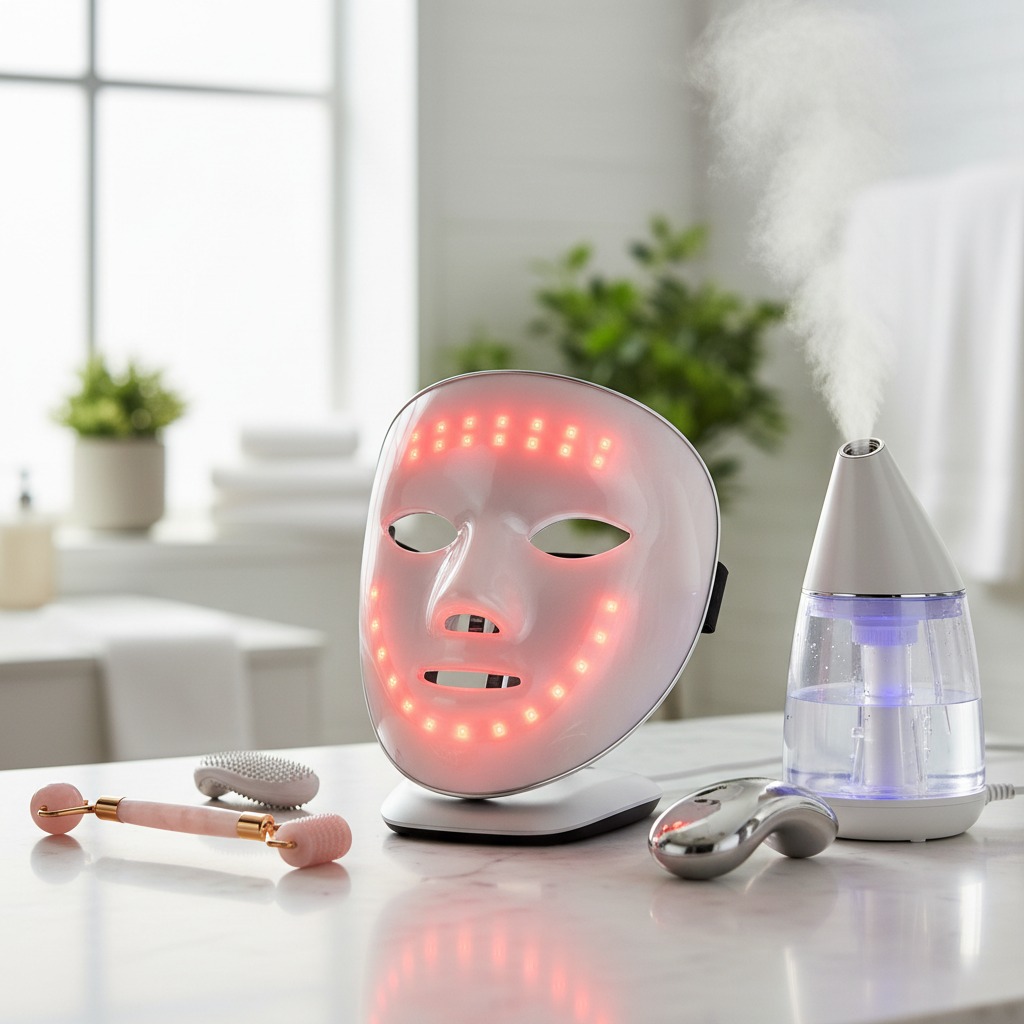
Red light therapy is one of the most popular skincare technologies for people interested in anti-aging skincare. These devices use specific wavelengths of red light, sometimes combined with near-infrared light, to influence cellular processes associated with skin repair and collagen production.
Red light therapy is also known as photobiomodulation. It is commonly used in at-home skincare routines to address fine lines, uneven texture, and mild signs of skin aging. Research suggests that some red light devices may improve aspects of skin appearance, although results vary depending on the device, treatment schedule, and individual response.
✨ Potential Benefits of Red Light Therapy
- Supports collagen production: May stimulate cellular processes involved in maintaining the skin’s structure.
- Improves the appearance of fine lines: May soften the look of some fine lines and wrinkles over time.
- Supports skin firmness: May help improve certain measures of skin elasticity and the appearance of mild skin laxity.
- Improves skin texture: May help skin look smoother and more refreshed.
- Non-invasive treatment: Does not require needles or surgical procedures.
💡 Types of Red Light Therapy Devices
- LED face masks: Designed to treat much of the face at once.
- Handheld red light wands: Allow more targeted treatment of smaller areas.
- Red light panels: Provide broader coverage for the face, neck, chest, or other body areas, depending on the device.
- Red light body wraps: Designed for areas such as the abdomen, although evidence for substantial tightening of loose body skin is limited.
👤 Who Might Benefit?
Red light therapy may be worth considering if you want to address early signs of aging, fine lines, or uneven skin texture without an invasive procedure.
What to know: Results are usually gradual and may be modest. Choose a device with clearly disclosed wavelengths, appropriate safety information, and credible evidence for its intended use. Follow the manufacturer’s treatment instructions and eye-safety guidance. Consult a dermatologist first if you have a photosensitive condition, take medication that increases light sensitivity, or have concerns about pigmentation.
🔵 2. Blue Light Therapy Devices
Blue light therapy is a popular skincare option for people dealing with acne-prone skin and recurring blemishes. These devices use specific wavelengths of blue LED light to target processes associated with acne-causing bacteria on the skin.
Blue light therapy is different from red light therapy. Blue light is primarily used in acne-focused devices, while red light is commonly marketed for skin rejuvenation and may help address certain signs of aging. Some devices combine both wavelengths.
✨ Potential Benefits of Blue Light Therapy
- Helps manage acne: Clinical research suggests that some at-home blue and combination red-blue LED devices may improve mild to moderate acne.
- Targets acne-associated bacteria: Blue light can activate compounds produced by Cutibacterium acnes, generating reactive oxygen species that can damage the bacteria.
- Supports an acne skincare routine: May complement established acne treatments.
- Convenient at-home use: Available in masks, handheld devices, and targeted acne lights.
💡 Types of Blue Light Devices
- Blue LED face masks: Treat broader facial areas prone to breakouts.
- Blue light wands: Target individual blemishes or smaller areas.
- Combination red and blue LED devices: Combine acne-focused blue light with red light intended to support skin appearance and help address inflammation.
👤 Who Might Benefit?
Blue light therapy may be suitable for people with mild to moderate acne who want a non-invasive addition to their skincare routine.
What to know: Blue light therapy does not treat every type of acne and may not be sufficient for severe or cystic breakouts. It is not a replacement for proven acne treatments when those are needed. Follow eye-protection instructions and consult a dermatologist if acne is persistent, painful, or causing scarring.
⚡ 3. EMS and Microcurrent Facial Devices
EMS and microcurrent facial devices are designed to deliver low-level electrical stimulation through the skin. They are popular among people who want to improve the appearance of facial contours, temporarily lift the look of certain areas, or incorporate an at-home facial treatment into their routine.
Although EMS and microcurrent are often grouped together, they are not identical. Microcurrent devices generally use very low electrical currents and are marketed for facial toning and cosmetic rejuvenation. EMS, or electrical muscle stimulation, is intended to stimulate muscle contractions. The actual effects depend on the device’s technology and settings.
✨ Potential Benefits of EMS and Microcurrent Devices
- Temporary improvement in facial contours: Some users notice a more defined appearance immediately after treatment, although the effect may be short-lived.
- Facial muscle stimulation: EMS devices are designed to stimulate muscle contractions in the treated area.
- Improved appearance of skin firmness: Some devices are marketed for facial toning, but evidence for lasting lifting effects from at-home microcurrent devices remains limited.
- Convenient facial treatments: Many devices are compact and designed for use at home.
💡 Common Types of Devices
- Microcurrent facial wands: Typically use small conductive treatment heads for targeted facial application.
- Dual-sphere facial devices: Use two rounded conductive heads to glide over the cheeks, jawline, and forehead.
- EMS facial devices: Deliver electrical stimulation intended to produce muscle contractions.
- Multi-function beauty devices: Combine microcurrent or EMS with other features, such as LED light or warming functions.
👤 Who Might Benefit?
These devices may appeal to people interested in temporary cosmetic facial toning or a more structured at-home facial routine.
What to know: Claims of permanent lifting, wrinkle removal, or major facial reshaping should be viewed cautiously. Use only the conductive gel or other products specified by the manufacturer. Electrical stimulation devices may be unsuitable for people with pacemakers or other implanted electronic devices, certain neurological conditions, or pregnancy. Check the device’s contraindications and consult a healthcare professional when necessary.
❄️ 4. Depuffing Wands and Facial Massage Devices
Depuffing wands are skincare tools designed to massage the face and temporarily reduce the appearance of puffiness. They may use cooling surfaces, gentle vibration, massage, or a combination of features.
Facial puffiness can be influenced by fluid retention, sleep, allergies, and other factors. Cooling and gentle massage may temporarily improve the appearance of mild puffiness, particularly around the eyes. However, these tools do not permanently remove facial fat or tighten loose skin.
✨ Potential Benefits of Depuffing Wands
- Temporary reduction in puffiness: Cooling may help reduce the appearance of mild swelling.
- Refreshed-looking skin: Can make the face appear more awake, especially in the morning.
- Relaxing facial massage: May help relieve facial tension and make skincare application feel more enjoyable.
- Improved product application: Some tools help spread serums or moisturizers across the skin.
💡 Types of Depuffing Devices
- Cooling facial wands: Use a cool treatment surface to soothe the skin.
- Vibrating facial massagers: Combine massage with gentle vibration.
- Metal facial rollers: Provide a smooth surface for cooling and massage.
- Electric eye massagers: Are designed for gentle use around the eye area.
👤 Who Might Benefit?
Depuffing tools may be useful for people who experience occasional morning puffiness and want a quick, non-invasive addition to their skincare routine.
What to know: Use gentle pressure, especially around the eyes. Avoid applying massage tools to irritated skin, active inflammation, or areas with unexplained swelling. Persistent or sudden facial or eye swelling should be evaluated by a healthcare professional rather than treated with a beauty device.
💧 5. Ultrasonic Cleansing and Infuser Devices
Ultrasonic cleansing devices and skincare infusers are designed to support facial cleansing or the application of skincare products. Although they are sometimes marketed together, they use different technologies and should not be assumed to provide the same benefits.
Ultrasonic skin spatulas use high-frequency mechanical vibrations to help loosen surface debris and assist with cleansing. Infuser devices may use sonic vibration, electrical currents, or other technologies to help distribute skincare products across the skin.
✨ Potential Benefits of Ultrasonic Cleansing Devices
- Helps remove surface debris: May assist with cleansing when used correctly.
- Supports a cleansing routine: Some devices are designed to complement a gentle facial cleanser.
- Smoother-feeling skin: May temporarily improve the feel of skin by removing surface buildup.
- Convenient at-home care: Provides another option for people who enjoy using skincare tools.
✨ Potential Benefits of Skincare Infuser Devices
- Supports product application: May help distribute serums or moisturizers evenly.
- May improve delivery of certain ingredients: Some technologies are designed to enhance the penetration of specific topical ingredients, although effectiveness depends on the device and formulation.
- Enhances the skincare routine: May make applying skincare products more convenient or enjoyable.
💡 Types of Ultrasonic and Infuser Devices
- Ultrasonic skin spatulas: Use vibration to assist with surface cleansing.
- Sonic facial cleansing brushes: Use vibration or oscillation to help cleanse the skin.
- Electroporation or galvanic infusers: Use electrical technologies intended to enhance the delivery of certain skincare ingredients.
- Multi-function cleansing devices: Combine cleansing with other features, depending on the model.
👤 Who Might Benefit?
These devices may suit people who want to supplement their cleansing routine or improve the application of their usual skincare products.
What to know: Evidence varies considerably between devices. Aggressive cleansing or excessive exfoliation can irritate the skin barrier, especially if your skin is sensitive, dry, or prone to redness. Keep devices clean and follow the manufacturer’s instructions. Do not assume that an infuser makes every skincare ingredient more effective or safe for deeper delivery.
🔌 6. TENS Devices for Facial and Skin Care
TENS stands for transcutaneous electrical nerve stimulation. TENS devices deliver electrical impulses through the skin to stimulate sensory nerves and are primarily used for pain relief. They are not the same as microcurrent facial devices or EMS beauty tools, even though all may involve electrical currents.
Some beauty products use the term TENS loosely when describing electrical stimulation. Before purchasing a device for cosmetic use, check its actual technology and intended purpose.
✨ What TENS Devices Can Do
- Provide temporary pain relief: TENS is commonly used to help manage certain types of pain.
- Stimulate sensory nerves: Electrical impulses act on nerves rather than functioning as a conventional skincare treatment.
- Support specific therapeutic goals: Benefits depend on the type of pain, device, and individual response.
💡 Are TENS Devices Good for Skin Tightening?
TENS devices are not established treatments for collagen production, wrinkle reduction, or skin tightening. If your goal is facial toning or cosmetic rejuvenation, look for a device specifically designed and evaluated for that purpose rather than assuming a TENS unit will provide similar results.
👤 Who Might Benefit?
People seeking non-invasive electrical stimulation for pain management may benefit from an appropriately selected TENS device under suitable guidance. It should not be purchased solely as an anti-aging skincare tool.
What to know: Do not place TENS electrodes on the face, near the eyes, or on the front of the neck unless a qualified healthcare professional has specifically confirmed that the device is designed and appropriate for that use. TENS may be unsuitable for people with certain implanted electronic devices or other medical conditions. Follow the device instructions and seek professional guidance if you are unsure.
♨️ 7. Facial Steamers
Facial steamers release warm water vapor onto the face. They are popular in at-home spa routines because they provide a relaxing experience and can temporarily soften surface buildup before cleansing.
Steam does not permanently open pores, remove deep blackheads, or tighten skin. Pores do not open and close like doors, and steaming is not essential for an effective skincare routine.
✨ Potential Benefits of Facial Steamers
- Softens surface buildup: Warm moisture may help loosen oils and debris before cleansing.
- Creates a spa-like experience: Can make a skincare routine feel relaxing.
- Provides temporary hydration to the skin surface: Warm vapor can add moisture temporarily, although excessive heat may worsen dryness or irritation.
- Prepares skin for gentle cleansing: May help make surface impurities easier to remove without aggressive scrubbing.
💡 Types of Facial Steamers
- Electric facial steamers: Produce warm vapor for home facial treatments.
- Compact facial steamers: Offer a smaller option for occasional use.
- Nano-ionic steamers: Market fine vapor delivery, although marketing claims about superior penetration should be evaluated carefully.
👤 Who Might Benefit?
Facial steamers may appeal to people who enjoy occasional at-home spa treatments and tolerate warm moisture without irritation.
What to know: Heat and steam can aggravate rosacea, eczema, sensitive skin, or visible facial redness. Excessive heat can cause burns. Keep your face at the recommended distance, follow the manufacturer’s instructions, and avoid using boiling water or placing your face directly over a pot of hot water. A facial steamer is optional, not a necessary step in an effective skincare routine.
🛍️ How to Choose the Best Skincare Device for Your Needs
The best skincare device is the one that addresses your main concern, has credible evidence supporting its intended use, and can be used safely and consistently. Before investing in an at-home beauty tool, consider the following factors.
🎯 Identify Your Main Skin Concern
- Fine lines and mild signs of aging: Consider a red light therapy device with evidence supporting its intended use.
- Acne-prone skin: A blue or combination red-blue LED device may be worth considering alongside an appropriate acne routine.
- Temporary facial toning: Microcurrent or EMS devices may offer cosmetic effects, but long-term lifting claims require caution.
- Morning puffiness: A cooling wand or gentle facial massage tool may provide a temporary improvement.
- Surface cleansing: Consider an ultrasonic cleansing tool if your skin tolerates it and you use it gently.
- Pain management: A TENS device may be appropriate for a therapeutic purpose, not as a substitute for a skincare device.
- At-home spa treatments: A facial steamer may suit you if your skin tolerates heat and moisture.
🔎 Check the Technology and Safety Information
- Look for a clear explanation of how the device works and what it is intended to treat.
- Check available clinical evidence for the specific technology and, where possible, the actual device.
- Review safety instructions, contraindications, and any required protective equipment.
- Be cautious of claims promising instant lifting, permanent pore reduction, dramatic wrinkle removal, or guaranteed results.
- Check whether the device has appropriate regulatory clearance or authorization for its intended use. In the United States, FDA clearance does not guarantee effectiveness for every person or every advertised claim.
- Consider the ongoing cost of conductive gels, replacement parts, or other accessories.
🌿 Do You Really Need Skincare Devices?
Skincare devices can be useful additions to a beauty routine, but they are not essential for healthy skin. Consistent use of a gentle cleanser, a moisturizer suited to your skin type, and daily broad-spectrum sunscreen remains a strong foundation for most skincare routines.
Depending on your skin concerns, evidence-based ingredients such as retinoids, vitamin C, or acne treatments may offer more established benefits than some beauty gadgets. Introduce new products gradually, especially if you have sensitive skin.
If you decide to use a device, introduce one at a time so you can assess how your skin responds. Avoid combining multiple treatments in a single session unless the device instructions and a qualified professional indicate that doing so is appropriate.
❓ Frequently Asked Questions About the Best Skincare Devices
What is the best skincare device for anti-aging?
Red light therapy devices may help improve certain signs of skin aging, including fine lines and skin texture. However, results vary, and no single at-home device is best for everyone. Daily sunscreen and an appropriate skincare routine remain essential.
What is the best skincare device for acne?
Blue LED and combination red-blue LED devices may help improve mild to moderate acne. Their effectiveness varies, and they may work best as part of a broader acne treatment plan.
Do microcurrent devices really lift the face?
Some users experience a temporary improvement in facial contour or the appearance of firmness. Evidence for lasting lifting effects from at-home microcurrent devices is limited, and results should not be compared with surgery or professional procedures.
Are depuffing wands worth it?
They may be useful for temporarily reducing the appearance of mild puffiness and making the face look refreshed. They do not permanently remove fat or correct significant skin laxity.
Do ultrasonic cleansing devices improve skin?
Some devices may assist with surface cleansing, but results depend on the technology and how the device is used. Overuse can irritate the skin, and a gentle cleanser is sufficient for many people.
Can facial steamers tighten skin or shrink pores?
No. Facial steamers do not permanently tighten skin or shrink pores. They can provide temporary warmth and moisture, but excessive heat may irritate sensitive skin.
Can you use multiple skincare devices together?
Some devices can be incorporated into the same routine, but compatibility depends on their technology, treatment intensity, and your skin condition. Follow each manufacturer’s instructions and avoid stacking treatments that may cause irritation or excessive stimulation.
🎯 Final Thoughts: Finding the Best Skincare Devices
The best skincare devices depend on what you want to achieve. Red light therapy may help support skin rejuvenation, blue light therapy may complement an acne routine, and microcurrent devices may provide temporary cosmetic toning. Depuffing wands can refresh the appearance of the face, ultrasonic devices may assist with cleansing, TENS devices serve a primarily therapeutic role, and facial steamers offer an optional spa-like experience.
Before purchasing any at-home beauty device, look beyond the marketing claims. Consider the available evidence, safety information, cost, and whether the technology is appropriate for your skin concern.
Ultimately, the best skincare device is one that meets a specific need, is safe for your skin, and complements a consistent skincare routine.